Water Based Sealer vs Asphalt Based Sealer
If your driveway or parking lot is starting to fade, dry out, or show early cracking, the question of water based sealer vs asphalt based sealer is not just about appearance. It is about how well the material protects the pavement you already paid for and whether you are getting a surface coating or a treatment that actually helps preserve the asphalt.
That difference matters more than most property owners realize. Two sealers can both leave asphalt looking darker for a while, yet perform very differently once the surface faces sun, rain, road salt, fuel drips, traffic, and Pennsylvania freeze-thaw cycles. For property owners researching asphalt sealing, the real issue is not just how black the pavement looks on day one. It is how well the material helps the asphalt hold up over time.
Water based sealer vs asphalt based sealer: the core difference
The simplest way to understand water based sealer vs asphalt based sealer is this: one is mostly a film that sits on top, while the other can do more to work with the asphalt itself.
Water based sealers are commonly used because they are easy to apply and can improve color in the short term. They create a surface coat that freshens the look of worn asphalt and adds a layer between the pavement and the elements. For some properties, that basic cosmetic improvement is what gets sold.
Asphalt based sealer is different in both composition and purpose. A high-quality asphalt-based rejuvenating sealer is designed to penetrate the surface, help restore some of the compounds asphalt loses as it ages, and protect against ongoing oxidation and brittleness. That is a very different goal than simply painting the top black again.
For a homeowner or property owner, the practical question is straightforward: do you want a temporary surface coating, or do you want a treatment aimed at longer-term asphalt preservation?
Why asphalt ages in the first place
Asphalt does not fail all at once. It gradually dries out. Sun exposure, oxygen, water intrusion, traffic, road salt, and seasonal temperature swings slowly remove flexibility from the pavement. As those lighter oils and binders diminish, the surface becomes more brittle.
That brittleness usually shows up first as fading, then minor cracking, and then more noticeable deterioration. By the time a driveway looks rough and gray, it is often already losing the qualities that helped it stay resilient in the first place.
This is why the type of sealer matters. If asphalt is aging from the inside out, a material that only changes the color on top has clear limits. It may improve appearance for a while, but it does not necessarily address the underlying condition of the pavement the way a penetrating asphalt-based rejuvenating product can.
How water based sealers typically perform
Water based sealers have a place in the market because they are widely available and can create a quick visual improvement. Right after application, many property owners like the darker look. On a surface that is still in decent shape, that freshened appearance can make a driveway or parking lot look more maintained.
The trade-off is that water based products are often more about coating than restoring. They tend to remain near the surface, and over time, traffic and weather wear that coating down. Once that happens, the asphalt underneath is still the same asphalt that was drying out before.
That does not mean every water based product is useless. It means expectations should be realistic. If your main goal is short-term color improvement, a water based sealer may do that. If your goal is to help preserve aging asphalt and slow the path toward more expensive repairs, it is often not the stronger option.
Another issue is that some water based coatings can make customers think the job was successful simply because it looked good on day one. The real test comes later, after the seasons change and the surface has to stand up to actual use.
How asphalt based rejuvenating sealer stands apart
A premium asphalt-based rejuvenating sealer is built around protection first and appearance second, even though it improves both. Instead of acting only like a topcoat, it penetrates the pavement and helps replenish what weather and oxidation have taken away.
That matters because healthier asphalt is less likely to become dry, brittle, and vulnerable. A penetrating asphalt-based material helps the surface better resist cracking, water intrusion, UV damage, road salt exposure, and general wear. For commercial surfaces, that can also mean better resistance to the daily punishment of vehicle traffic. For homeowners, it means better odds of extending the life of the driveway and keeping it looking sharp.
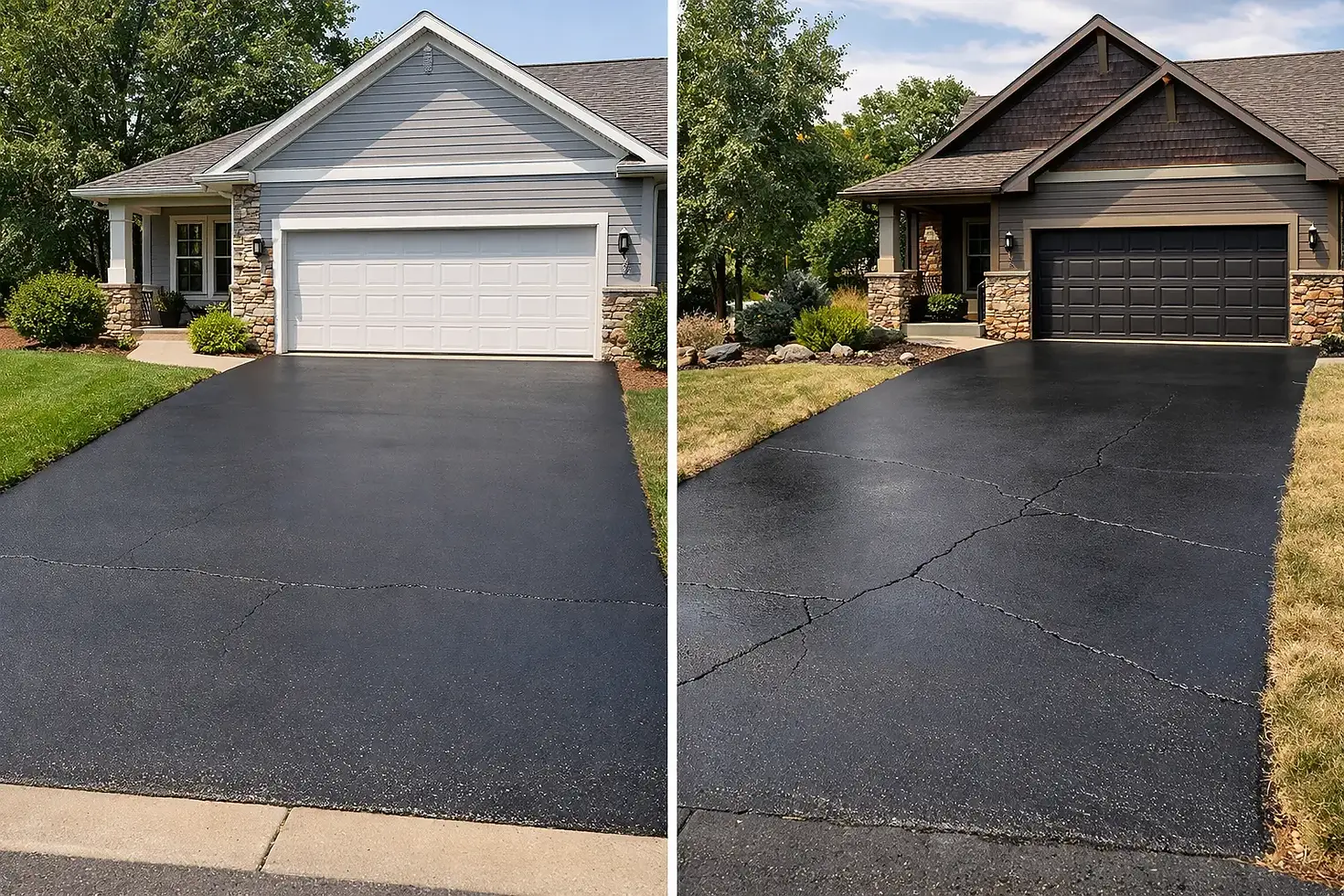
The appearance benefit is different too. Rather than a flat painted look, quality asphalt-based sealing tends to restore a deeper black finish with more of a fresh-paved sheen. That is one reason many property owners see it as both a protection upgrade and a curb appeal upgrade.
Which lasts longer?
This is where the conversation gets practical. A sealer that sits mostly on top of the pavement can wear away faster because the protection is concentrated at the surface. Once that coating thins out, the asphalt is again exposed to the same damaging cycle.
An asphalt-based rejuvenating sealer generally offers better long-term value because it is not relying only on a superficial film. By penetrating and conditioning the asphalt, it helps the pavement remain in better shape between service intervals. That does not mean any sealer makes asphalt permanent, because no product can stop aging forever. But better material can absolutely change how well the pavement holds up over time.
If you are comparing estimates, this is one of the biggest reasons cheaper is not always cheaper. Saving money on a lower-grade sealer can cost more later if the driveway dries out faster, cracks sooner, or needs more repair work down the line.
Water based sealer vs asphalt based sealer for Pennsylvania conditions
In central Pennsylvania, the climate makes material choice even more important. Rain, snow, ice, road salt, summer heat, and freeze-thaw movement all work against asphalt. That is hard on any surface, but especially on pavement that is already oxidized and losing flexibility.
In those conditions, a basic cosmetic coating is often not enough. Property owners in Blair County, Bedford County, and Centre County often need more than a quick darkening effect. They need protection that helps the asphalt defend itself against moisture, seasonal stress, and surface breakdown. The same kind of wear also shows up across Cambria, Fulton, Mifflin, Somerset, Huntingdon, and Clearfield counties, even though those county pages are not live yet.
That is why many homeowners and commercial property managers prefer an asphalt-based rejuvenating approach. It aligns better with the real problem, which is preserving pavement exposed to hard weather year after year.
When a water based sealer might be chosen
There are cases where someone still chooses a water based sealer. Usually, it comes down to upfront price or a desire for a basic appearance improvement on a surface they are not planning to keep long term. Some property owners simply want the least expensive option that darkens the pavement for now.
But that is not the same as making the best maintenance decision. If the asphalt has already started drying out, fading, or showing early signs of aging, a surface-only solution may leave too much value on the table. The pavement may look better temporarily while continuing to weaken underneath.
That is the real trade-off. Water based products can be acceptable for short-term appearance. Asphalt-based rejuvenating sealers are better suited for owners who care about long-term condition, stronger protection, and a more premium finished result.
What property owners should look for in a sealing service
The product matters, but so does the company applying it. Not every asphalt sealing contractor is focused on preservation. Some are focused on getting a black color on the ground as fast as possible.
A better approach is to look for a specialist who understands asphalt aging, uses a premium asphalt-based rejuvenating sealer, and explains the difference in plain language. You want a company that treats sealing as preventive maintenance, not just surface cosmetics.
That is especially important for homeowners trying to avoid expensive replacement and for businesses that want parking lots to stay presentable and protected. The right material should help extend pavement life while also giving it the rich, dark finish people notice right away.
For property owners in central Pennsylvania, that combination of preservation and appearance is what makes the service worth doing in the first place. A quality sealing job should do more than cover up wear. It should help slow it down.
If your asphalt is worth protecting, choose the sealer that does more than sit on top. Whether you are maintaining a driveway in Altoona, a residential surface in Bedford, or pavement in State College, the best time to preserve asphalt is before small signs of aging turn into bigger repair bills.
Comments