Does Water Damage Blacktop Driveways Over Time?
A driveway can look solid on the surface while water is quietly creating a much bigger problem underneath. So, does water damage blacktop driveways? Yes. Water is one of the main reasons asphalt cracks, sinks, crumbles at the edges, and eventually develops potholes. In central Pennsylvania, rain, snowmelt, road salt, and freeze-thaw cycles give moisture plenty of opportunities to work its way into aging pavement.
The good news is that most water-related damage starts slowly. Homeowners and property managers who catch the warning signs early can often protect the surface and extend its useful life before repairs become more involved and expensive.
How Water Damages Blacktop Driveways
Blacktop, more commonly called asphalt, is designed to shed water when it is in good condition. Its asphalt binder holds aggregate together and creates a dense, flexible driving surface. But sun exposure, traffic, time, and Pennsylvania weather gradually oxidize that binder. The pavement fades from black to gray, becomes drier and more brittle, and develops small openings that let water enter.
Once moisture gets below the surface, it can weaken the pavement from the bottom up. Water may soften the stone base beneath the asphalt, move fine material out of place, and reduce the support the driveway needs to carry vehicles. That is when a thin crack can become a larger break, a low spot, or a pothole.
Water is especially damaging when it remains in one area instead of draining away. A driveway that regularly holds puddles near the garage, at the bottom of a slope, or along an edge is more vulnerable than one that drains properly. Surface water alone is not always an emergency, but repeated standing water should never be ignored.
Freeze-Thaw Cycles Make Small Problems Bigger
Central Pennsylvania winters add another layer of stress. Water enters a crack, freezes, and expands. When temperatures rise, it thaws and leaves a slightly wider opening behind. The next rain or snowmelt sends more water into that opening, and the cycle repeats.
This is why a crack that seems minor in fall can look noticeably worse by spring. The damage is not just cosmetic. As cracks widen, they allow more moisture into the base and expose more asphalt edges to breaking apart.
Road salt can also contribute to the problem. Salt does not directly dissolve asphalt, but it can keep moisture active through winter conditions and increase the number of wet-dry cycles the pavement experiences. If the asphalt is already oxidized or cracked, that ongoing exposure can speed up deterioration.
Signs Water Is Already Affecting Your Driveway
The most obvious sign is cracking, particularly cracks that stay dark after rain or appear to spread from a low area. Alligator cracking, which resembles a web of connected cracks, often indicates that the pavement and the supporting base have both lost strength. Sealcoating can help protect sound asphalt, but heavily alligatored areas may need repair before any protective treatment is applied.
Watch for depressions where water collects after a storm. A shallow puddle may point to a drainage issue, base movement, or both. Soft spots, crumbling edges, loose aggregate, and potholes are additional clues that moisture has been getting below the surface.
Fading matters, too. A gray driveway is not automatically failing, but it is often a sign that the asphalt binder has oxidized and lost some of its flexibility. That dry, weathered surface is more likely to absorb water than a well-maintained black asphalt surface.
Why Drainage and Surface Protection Work Together
There is no single maintenance step that solves every water issue. If a driveway has a serious drainage problem, sealing alone will not correct the slope or remove standing water. Likewise, excellent drainage cannot fully protect an unsealed, brittle driveway with open cracks.
The best approach is to manage water from both directions: keep it moving off the pavement where possible, and maintain a protected asphalt surface that is less likely to absorb it. Clear debris from driveway edges and drainage paths so rainwater is not trapped. Address cracks before they widen. Pay attention to downspouts that discharge directly onto the asphalt, especially in the same spot after every rainfall.
For parking areas and commercial properties, check where water gathers near entrances, catch basins, loading areas, and travel lanes. Those locations receive repeated vehicle weight in addition to moisture, which can accelerate surface failure.
Does Water Damage Blacktop Driveways Even If They Are Sealed?
A properly maintained sealed driveway has better protection, but no coating makes asphalt invincible. Water can still cause damage through existing cracks, failed edges, poor drainage, or weak areas in the base. The condition of the pavement before treatment matters just as much as the treatment itself.
That said, the right sealer can make a meaningful difference for pavement that is still structurally sound. Ordinary water-based surface coatings may improve color for a time, but they can leave a dull black appearance and sometimes show blue, brown, or white hues. More importantly, they primarily sit on top of the asphalt.
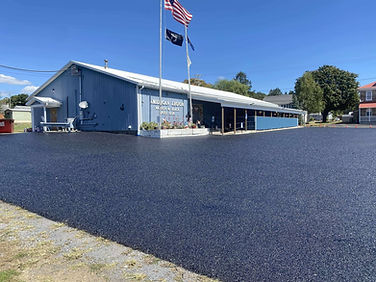
Cove Asphalt Sealing uses a premium asphalt-based rejuvenating sealer designed to penetrate the pavement rather than simply coat the surface. It helps restore lost compounds in aging asphalt while providing protection against oxidation, UV exposure, water intrusion, road salt, fuel spills, and surface unraveling. The result is a deeper black finish with a fresh-paved sheen, along with practical protection for the asphalt beneath it.
This type of preservation is most valuable before major deterioration takes hold. A driveway with light cracking, fading, or early signs of dryness is often a strong candidate for maintenance. A driveway with widespread structural cracking, major depressions, or loose broken sections may need those problem areas evaluated and repaired first.
When Should You Seal a Driveway to Help Prevent Water Damage?
The right schedule depends on the age of the asphalt, its exposure to sun and traffic, drainage conditions, and the type of product used. There is no responsible one-size-fits-all interval. A shaded driveway with good drainage may age differently than a wide, sun-exposed driveway that receives daily traffic and winter salt.
Instead of waiting until the pavement looks severely worn, inspect it regularly. If the surface is turning gray, small cracks are appearing, or water no longer seems to bead or run off as it once did, it is worth having a local asphalt maintenance specialist assess its condition. Timely crack attention and a quality rejuvenating sealer can help keep moisture from gaining easy access to the pavement.
Dry weather and appropriate pavement temperatures are also essential for professional application. Applying any sealer to wet pavement or during unsuitable weather can compromise the result. A careful evaluation should consider the forecast, the driveway's condition, and whether the surface is ready for treatment.
Protect the Pavement Before Water Gets Below It
Replacing a driveway is far more disruptive and costly than preserving one that still has a sound foundation. The goal is not to wait for potholes to prove there is a problem. It is to recognize fading, cracks, puddles, and brittle asphalt as early warnings that maintenance can address.
If your driveway or parking area is showing signs of water exposure, a professional assessment can help you determine whether it needs crack repair, improved drainage attention, protective sealing, or a combination of these steps. For property owners across central Pennsylvania, protecting the asphalt now can mean a stronger surface, better curb appeal, and fewer surprises after the next hard winter.
Comments